
I was talking with my friend Reg about the difference between words from Britain and words in Canada or United States; one word in particular stuck out was “pudding”.
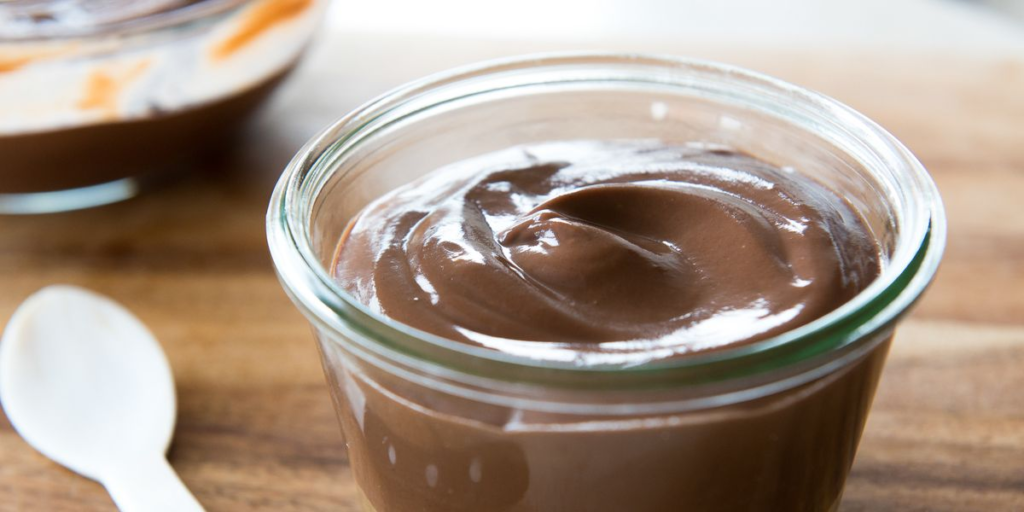
Reg said that in England, “pudding” was all kinds of desserts: he listed off desserts like rice pudding, treacle sponge pudding or Christmas pudding; he said there were savoury puddings such as Yorkshire pudding, black pudding, suet pudding and steak and kidney pudding.

As he said each of the different types of desserts I realize that I was having a different sense in my mouth and other parts of me to each of the words: there was one sensation for a pie ( I was thinking of a of a rich apple pie) and then for cake (I had an image of the chocolate cake that my mother used to make on birthdays) and then for a pudding ( the sense-memory of making a butterscotch pudding on the stove). Each has a different sensation in my mouth, each a different sense memory, a complex sense of sensations, including actions such as sturing.
How is it that I have a different sense memory for each of these even since memories that are decades old? We often call these associations. Psychologist call these learned sensations and the process of learning them was demonstrated by Pavlov and has been called “classical Conditioning”. And so in a sense I was responding and exactly the same way as Pavlov’s dog: I heard a stimulus word (“chocolate cake”) and I had an immediate reaction in my mouth just like Pavlov’s dog did.
When you think about this kind of associative learning you can think of many many instances in your life different images ideas words evoke experience within yourself.
But what or where is the connection between associations and the stimulus that evokes them? Is the memory in the mouth where the sensation is felt (hence the idea of “muscle memory“)? Simply thinking the work evokes the sensation, so consequently the memory does not reside in the mouth. many many experiments have been done all all point to the grey matter in our skull, that we call ‘the brain”, and so on… to the invention of the idea of a nervous system with memory and sensory functions, and so on.
Grammar is defined as a system of a language, or the systematic use of parts of speech. (for fun with parts of speech, see “A ___ walks into a bar“). There is a grammar to learning, and part of that grammar has been encapsulated in the term, neuroplasticity.
The Feldenkrais Method somehow brings to awareness the underlying grammar of experience, the connection between associations and experience, between thought and movement, between emotions and action. Through opening this this process, the student is able to modify their own grammar of experience, change their associations, their reasons for emotions, their challenges in action.
Sit…. See… Walk
Three Months. Three Essential Functions. One Continuous Thread. In April, we sit. In May, we soften the eyes and jaw. In June, we walk. April
Improving Through Rolling
Maybe you have plans to improve or fix yourself – but do you know that you already have innate intelligence for improving? Watch a baby
Free Your Breath For Easy Sleep
Is your breathing is obstructed and interrupting your sleep? Here’s a process for you.
Better Meetings with Feldenkrais® Principles
Applying Principles of the Feldenkrais Method® to meetings can enhance productivity, communication, and overall well-being. Here are some principles that are particularly beneficial for meetings:
Tone up for Your Best Sleep
Do you wake up with aches and pains, even though you slept deeply? Maybe you were too relaxed! Can you be “too relaxed”? Consider being
Are you someone who does things because you enjoy them?
Here’s an anecdote from author and professional grump, Kurt Vonnegut: “When I was 15, I spent a month working on an archeological dig. I was