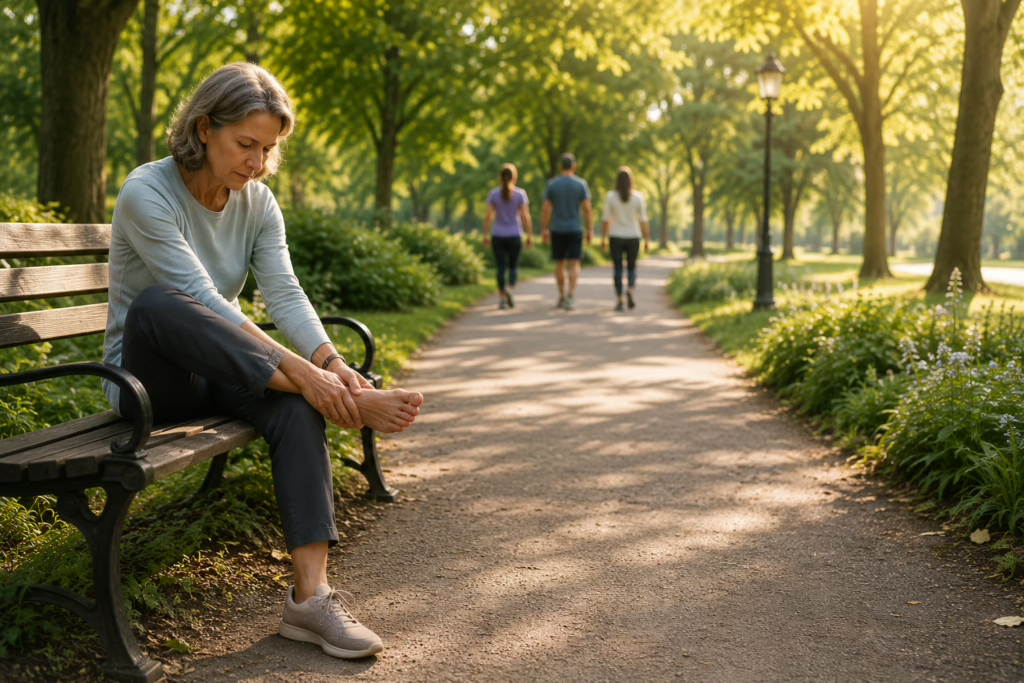
As healthy as walking may be, many people discover that pain limits how much they can enjoy it.
For years I have helped hundreds of people find more comfort and ease in walking.
As an artist, Hope was often in nature sketching and painting. But sciatica increasingly limited her willingness to walk. She found she didn’t want to venture too far from her car — and even short distances sometimes made the pain worse. Pushing herself didn’t seem to help either.
Joan develops hip pain after walking a few blocks — a flare-up of an old injury. She loves being out in her neighbourhood, learning the birds and seeing gardens flourish, but the pain limits both her enjoyment and how far she feels comfortable going.
Peter’s ankle pain flares up when he is shopping. It doesn’t take long at all for that old injury to return, and he finds himself leaning on the grocery cart to take pressure off the ankle.
Mary has tried many things to reduce pain in her foot while standing and gardening — orthotics, pads, different footwear. She wonders what else she might try.
Mike’s old knee injury flares up when he is hiking with friends. Sometimes he worries about being stranded on the trail. He uses hiking poles and good footwear, yet suspects there is something else going on. He wonders whether old habits in walking may somehow be involved.
Often we focus on the painful place — the knee, foot, hip or back. Yet walking is not simply movement of a part. It involves the whole person.
How we use our eyes, breathing, balance, pelvis and feet all contribute to how force travels through us. Sometimes pain persists not because we are weak or not trying hard enough, but because familiar habits continue to organize how we walk.
We may think we are doing the “right” thing, yet in no time the discomfort returns.
There is another possibility that may make a difference — the Feldenkrais Method®.
Rather than correcting posture or pushing through discomfort, this approach uses the brain’s natural capacity for learning. Through gentle, systematic exploration, people often discover new ways of organizing movement — sometimes making walking lighter, easier and more comfortable.
I invite you to explore the following short (13 minute) lesson on walking and comfort
Continue Your Learning.
Check out my articles:
- A short lesson on Walking comfort
- “Common Foot Problems and the Feldenkrais Method“
- “Happy Toes”
- 4-lesson series titled “Happy Feet“.
Additional courses for you to explore further, include the self-paced Free Introductory class.
If you are concerned about falling, or have difficulty getting up from the floor, consider the more extensive series, From the Floor to Standing.